Mapping Your Customer Journey - The Foundation That Changes Everything
Article 2 - From Silos to Symphony
Last week, we talked about why teams are working against each other (and how a unified CRM fixes it). The disconnection. The missed opportunities. But really it's more than CRM which we will now start to unpack together.
I asked you four questions. Today, we're diving into the first and most important one:
Do we really understand our customer's journey?
Because here's the thing: transformation starts with understanding. And when you truly understand your customer's journey everything changes.
Most businesses understand their internal processes. Their sales stages. Their marketing funnel. Their support workflow. But their customer's journey? That's where the magic happens when you get it right.
A Different Starting Point
Let me share something I've learned over the years, most successful businesses don't design their processes around their org chart. They design around their customers.
It's a mindset shift. Instead of "How do we sell?" it becomes "How do they buy?"
Instead of "What do we need from them?" it becomes "What do they need from us?"
When you flip this perspective, everything aligns differently. Teams start collaborating naturally because they're all focused on the same thing: helping customers succeed at each stage of their journey.
The Customer Journey Framework
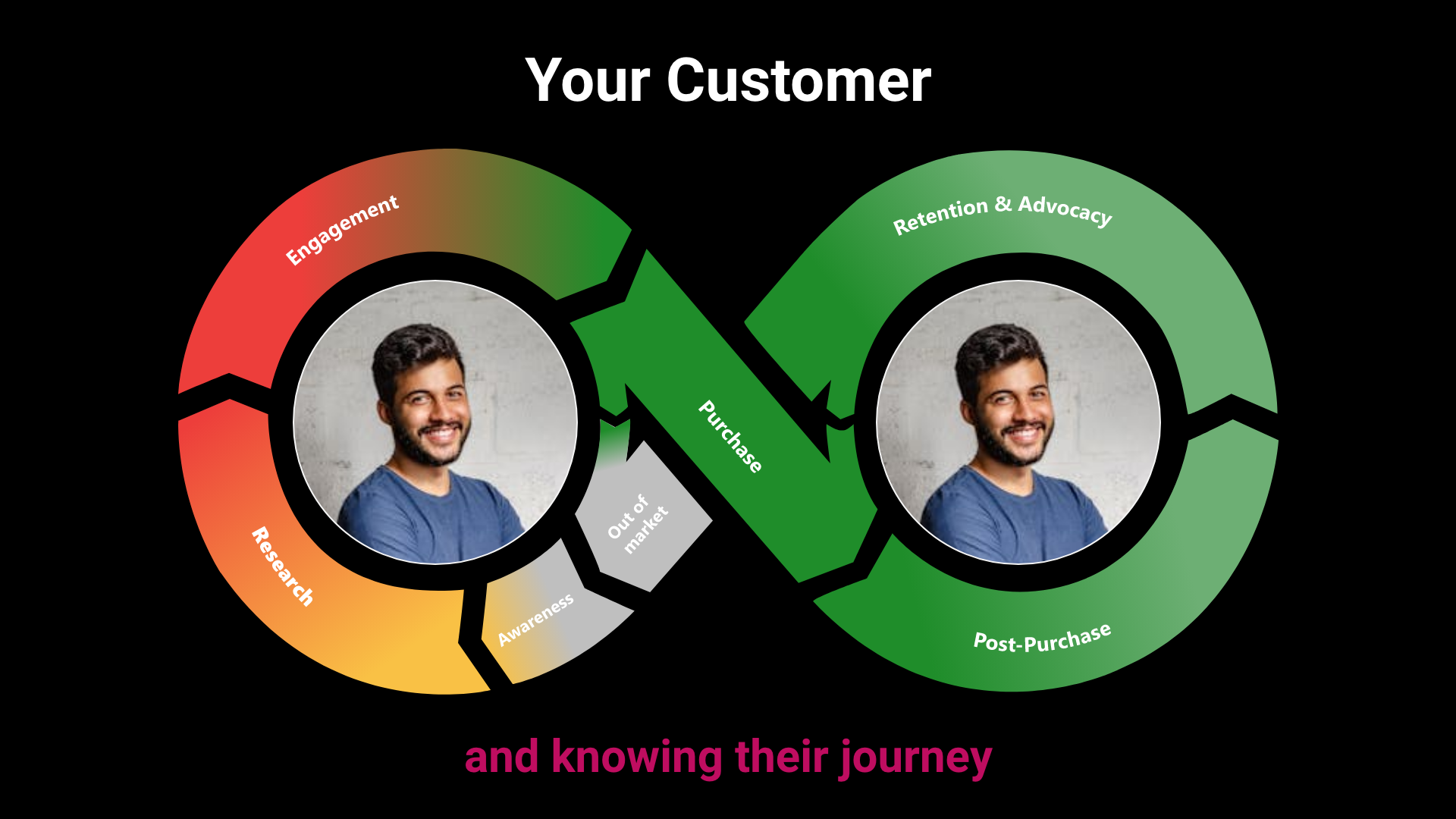
Let me share the framework we use at The Transformation Foundry. It's not a straight line. It's not a funnel that ends at purchase.
It's a continuous journey with seven distinct phases. And understanding each phase opens up incredible opportunities.
Phase: Out of Market
Let's paint the picture: Your potential customer isn't thinking about you yet. They're not even aware they have a challenge you could help solve.
But here's an important thought: People are influenced and influence others. We all do, to some degree.
So there's an opportunity here for ethical influence. Not manipulation. Not pressure. But genuine helpfulness that plants seeds for the future.
This is a long-term investment. It requires commitment to a philosophy: How can our services or products genuinely solve problems that benefit our potential customers?
Think about content that helps people in your industry. Thought leadership that shares insights freely. Being present in communities where your future customers gather, not to sell, but to contribute.
Strategic use of technology can amplify this influence positively:
Educational content that genuinely helps
Tools or resources you offer freely
Insights you share that make their work easier
The motive check is critical: Are we solving real problems? Or just trying to be seen?
When your motive is genuinely helping people succeed, this phase builds something powerful: trust. And trust is the foundation of everything that follows.
Phase: Awareness
Something shifts. A trigger happens. A pain point surfaces. A desire emerges. Suddenly, they're aware: "I need a solution for this" or "Ah that product will really help me solve X."
Maybe they saw something that made them think "we should be doing that." Maybe a competitor is outpacing them.
This is where the journey begins. But here's the key: they're not aware of YOU yet. They're aware of their NEED. This could have been influenced by a market trend or even by your work in the previous phase or better yet from the brand loyalty in the last phase.
And here's where your persona work pays off. When you truly understand who you're trying to serve, you recognize this awareness phase when it happens. You know what triggers it. You understand how they describe the problem.
Your ideal customer persona helps you identify:
What situations create awareness for them?
How do they talk about this problem?
What's their context when this realization hits?
Your opportunity? Be there when awareness strikes. Not with a sales pitch. With helpful resources that acknowledge: "Yes, this is a real challenge. Here's how others are thinking about it."
Phase: Research
Within this phase they start to search for a solution. They're now actively exploring. Googling. Reading reviews. Asking peers. Watching demos. Downloading resources.
They're trying to understand: "What solutions exist? Who can actually help? Who do I trust?"
This is where opportunity awaits. Are you fully aware of your customers' needs at this stage? Are you meeting them where they are?
Ask yourself:
What are you offering your potential customer at this point in their journey?
Is it genuinely helpful or just thinly veiled sales content?
Are you answering their questions or pushing your agenda?
How easy is it for them to get the answer they're searching for?
The businesses that win here? They're genuinely helpful. They create resources that educate, not just promote. They answer real questions. They share insights freely.
Because here's what's happening: they're forming opinions. About solutions. About companies. About who they trust.
Be the company that helps them understand your value, not the company that just wants their contact info.
This phase and what you offer them at this point is critical for the next phase. It's like, how approachable are you? Is it easy for them to engage with you? And what are you doing to engage with them?
Phase: Engagement
They've found you. They've done their research. Now they want to engage. Talk to someone. Get specific answers. Understand if you're the right fit.
This is where collaboration begins. And when your teams have context (what they downloaded, which pages they visited, what they care about), engagement becomes a conversation, not an interrogation.
Instead of "So... tell me about your business/need?" when they've already shared so much...
They hear: "I saw you downloaded our guide on X and spent time on Y. Are you dealing with this specific challenge? I would suggest X."
That's respect for their journey. That's showing you've been paying attention. That's the foundation of trust. This shows them you really care and know how to solve their problem.
The opportunity here: Create seamless handoffs between marketing and sales. Share context. Empower conversations. Make engagement feel natural, not transactional.
Phase: Purchase
The moment they commit. They buy. They choose you.
And here's something critical to understand: This isn't the climax. This is the starting point.
There's a temptation at this stage. To celebrate the win. To move on to the next prospect. To think "mission accomplished."
But truthfully? This is the starting point of building brand loyalty, which creates enormous value in the phases ahead.
Think about it: They just made a decision. Maybe a big one. Maybe an expensive one. Maybe one they had to convince others about.
Right now, they're asking: "Did I make the right choice?"
Your opportunity: Show them immediately that they did. Not with words. With action.
Smooth onboarding. Quick wins. Proactive communication. Making them feel confident and supported.
This phase determines everything that follows. Handle it well, and you build loyalty. Handle it poorly, and they start having regrets.
Phase: Post-Purchase
The honeymoon phase. The first 30, 60, 90 days. Are they getting value? Was onboarding smooth? Do they feel supported?
Here's where teams need to be intentional. Ask yourself:
What are we doing to keep customers engaged at this phase?
How do we support their post-purchase decision?
Are we going the extra mile to provide value?
What do we have IN PLACE for this phase? (Not ad-hoc. Intentional.)
The opportunity here is massive. Because happy customers in this phase don't just stay. They expand. They grow with you. They become advocates.
But it requires structure. Journeys that nurture. Check-ins that matter. Resources that help them succeed.
Think about your post-purchase experience:
Do customers know what to expect?
Do they still feel valued post purchase?
Are there clear milestones and wins?
Does someone check in proactively, or do you wait for them to have problems?
Are you making them feel like they made the right choice?
This phase is where customer success becomes customer loyalty.
Phase: Retention & Advocacy
If you've done everything right up to this point, something beautiful happens. They're not just staying. They're championing you.
Let me share a quick story.
Back in 2009, I was young. Well, younger. (I'm still youngish, I like to think! 😊) I was trying to stand out as a young marketeer, and I read a book that changed everything: "Purple Cow" by Seth Godin. If you've never read it, I highly recommend it. The core question Godin asks is simple but powerful:
Are you remarkable? Not just good. Not just competent. Remarkable. Like a purple cow in a field of brown cows. Something people can't help but notice and talk about.
At the end of the day, that's what this phase reveals: Are you standing out? Are you making a real impact that's changing lives and solving problems your customers actually care about?
This phase is the fruit of your earlier efforts. All those seeds you planted in Phase "out of market". The trust you built in Research. The respect you showed in Engagement. The commitment you demonstrated Post-Purchase.
And the reward? It's extreme.
Referrals that cost you nothing. Reviews that convince others. Case studies that sell for you. Word of mouth that outperforms any ad campaign. Customers who don't just renew—they expand. They buy more. They tell others. They become part of your story.
When you see the benefits of what this brings, you'll understand the power of all your efforts.
My advice? Don't party as hard as I did when I was 23 celebrating client wins. 😄 Balance is good. Keep your head and stay humble. Remember why you're doing this.
Where Your Teams Can Add Value
Now that we understand the customer journey, let's talk about where your teams can support at each phase. Not where org charts say they should. Where they can genuinely help customers succeed.
Out of Market & Awareness (Marketing's Foundation)
Marketing's opportunity: Build genuine influence. Create content that helps. Be present in communities. Share insights freely.
This isn't about broadcasting. It's about contributing.
SEO that answers real questions. Content that solves real problems. Thought leadership that helps people think differently, that shows them your value, that creates value for them.
The goal? When someone realizes they have a need, you've already been helpful. Trust is already building. Create a plan to be a light that people are drawn to, but one that doesn't zap them when they fly into you, but rather that keeps them warm and makes them safe.
Research (Marketing's Moment)
Still marketing's space, but here's where strategic thinking pays off.
What resources genuinely help people make informed decisions?
Case studies that show real results
Comparison guides that educate (even if competitors are mentioned!)
Demos that answer questions honestly
Content that acknowledges trade-offs
Content that supports their research
And here's the strategic part: Track what resonates. Score engagement. Identify who's genuinely interested versus casually browsing.
Then share this intelligence with sales. Not just contact info. Context.
Engagement (Marketing + Sales Together)
This is where collaboration creates magic.
Marketing's opportunity: Deliver warm, qualified leads with rich context. "Here's what they care about. Here's their company profile. Here's why they're ready to talk."
Sales' opportunity: Use that context to have meaningful conversations. Not pitches. Conversations. "Tell me about what you're hoping to accomplish."
Both teams together: Create a feedback loop. Marketing learns what makes leads convert. Sales learns what messaging resonates. Everyone gets better.
Purchase (Sales + Operations)
What's possible: Seamless transition from prospect to valued customer. Context flows automatically. Nothing gets lost. No repeated questions.
The opportunity here: Make the buying experience so smooth that confidence grows. Contracts are clear. Next steps are communicated. Expectations are set.
The purchase moment should feel like the natural next step in a relationship, not a transactional event.
Post-Purchase (Customer Service + Marketing + Sales)
Customer Service opportunity: Start with complete context. What they bought. Why they bought it. What they were promised. Every interaction they've had.
This allows proactive support, not reactive firefighting.
Marketing opportunity: Shift from acquisition to nurturing. Celebrate milestones. Share relevant resources. Ask for feedback. Offer relevant expansions when timing is right FOR THEM.
Both teams together: Identify at-risk customers early (so you can help). Spot happy customers ready to expand or refer (so you can enable their success).
Sales: Keep engaged. Check in. Understand them personally. BE REMARKABLE. Send them love. Real love is a big deal. Make them feel heard and cared for.
Retention & Advocacy (Everyone)
This is where unified CRM shows its full potential.
Everyone has visibility. Everyone has context. Everyone's empowered to help customers succeed.
Marketing runs targeted programs for existing customers. Events. Education. Community.
Sales spots natural expansion opportunities. "I noticed you're using X. Based on what you mentioned, Y might help with that challenge."
Customer Service turns satisfaction into advocacy. "You've been with us three years. We'd love to share your success story. Would you be open to that?"
The magic? It all feels natural because everyone's working from the same understanding of where the customer is in their journey.
The Power of Seamless Handoffs
Let's now talk about where incredible opportunities exist in the transitions.
Research → Engagement
The opportunity: Create agreement between marketing and sales on what "qualified" means. Build lead scoring models that reflect genuine interest. Share context that enables great conversations.
When this works, sales isn't sorting through noise. They're having meaningful conversations with people who are genuinely ready to engage.
Engagement → Purchase
The opportunity: Ensure that when someone buys, everyone who needs to know learns instantly. With context. So the customer never has to explain themselves again.
Onboarding triggers automatically. Teams have full history. The experience is seamless.
Purchase → Post-Purchase
The opportunity: Lifecycle stages that adapt. Journeys that change based on customer status. Communications that reflect their new relationship with you.
They're no longer prospects. They're customers. Everything should reflect that. They're part of your family now, so take care of them.
Moving From Departmental Goals to Shared Success
Here's what creates alignment:
Instead of:
Marketing goal: Generate X leads
Sales goal: Close Y deals
Service goal: Resolve Z tickets
Imagine:
Shared goal: Help customers succeed at each phase of their journey
Marketing success: Qualified leads who engage meaningfully
Sales success: Customers set up for long-term success
Service success: Proactive support that builds loyalty
When everyone's incentive aligns with customer success, collaboration becomes natural. Because helping customers succeed IS how each team succeeds.
Your Turn: Map Your Journey
Before Article 3 (where we'll explore D365 implementation), you need to do this work.
I'm not saying this lightly. This exercise is where transformation actually begins. Grab a whiteboard, open a Miro board, or gather around a table. And do the work.
👉 Download your homework here
Why This Comes Before Technology
Here's why we map journeys BEFORE exploring technology:
Technology amplifies your approach. If your approach creates value, technology scales that value. If your approach creates friction, technology scales that friction too.
But when you understand your customer journey? When your teams are aligned around shared success?
Technology becomes your enabler. It removes barriers. It provides context. It automates the helpful parts. It empowers people to do their best work.
Which is exactly what we'll explore in Article 3.
What Becomes Possible
When you truly understand your customer journey and align your teams around it, something remarkable happens:
Marketing can say: "Here are 15 highly engaged prospects who've explored our solutions, match our ideal profile, and are ready for conversation."
Sales can respond: "Perfect. I have full context on each one. Let me prioritize based on readiness and fit."
Customer Service can share: "This customer's been with us three years and just expressed interest in our new product. I flagged an opportunity for the account team."
Leadership can see: Complete visibility across the entire journey. One source of truth. Clear insights into what's working.
Everyone works from the same understanding of where customers are and how to help them succeed.
This isn't theory. This is what happens when you build on the right foundation.
What's Next?
In our next article, we'll show you how Microsoft Dynamics 365 Sales and Customer Insights - Journeys bring your customer journey map to life.
We'll explore:
How form submissions trigger helpful automated journeys
How lead scoring identifies your most engaged prospects
How sales teams get rich context before every conversation
How customer service has complete history instantly
How post-purchase nurturing happens automatically
How events and advocacy programs close the loop
Real examples. Real automation. Real impact.
But you needed this foundation first. The mapping work you just did (or downloaded to do) is what makes everything else work.
Because the best technology in the world can't fix a journey you don't understand.
Your Journey Starts Here
Take the time to map it. Download the workbook. Gather your team. Do the work.
The businesses that invest in this foundation? They get transformative results. The ones who skip to "show me the technology"? They end up with tools nobody uses to their full potential. The choice is yours. But I promise you this: the investment you make in understanding your customer journey will pay dividends in everything that follows.
Ready to see your customer journey come to life in D365?
Book a personalized demo where we'll map your specific journey and show you exactly how unified CRM enables it—with your use cases, your teams, and your goals.
👉 Book Your Demo here
👉 Download the Journey Mapping Workbook: here
Remember... transformation isn't about buying software. It's about understanding your customers, empowering your teams, and creating experiences that genuinely help people succeed.
Let's keep building together.
Stay Awesome! 🚀
Sean Abbood Founder, The Transformation Foundry
Next Tuesday, Article 3 - "D365 in Action: How Marketing and Sales Work Together Seamlessly" We'll walk through a real customer journey and show you exactly how D365 Customer Insights - Journeys and D365 Sales bring everything we've discussed to life.
Did this article help you? Share it with someone who needs to hear it.
